Sideways

I grew up in a small fishing town where summer entertainment meant jumping off the bridge. An unofficial ritual. From the railing, the water looked smooth as glass. It never was.
The bridge had a rip current. The danger wasn’t the jump. It was what happened after. Instinct told you to swim straight back to shore. That’s how people got into trouble.
The rule was simple: don’t swim toward shore. Swim parallel. Get out of the current first. Then angle back to the rocks and climb out.
It felt wrong, like moving away from safety. It was the only thing that worked.
I was calm in the water, watching the current instead of arguing with it. My dad was the same. Navigation mattered as much as strength.
One summer, two friends were pulled out. I saw it before I heard it, the way their strokes shortened, the water folding over their shoulders, the current widening beneath them. I jumped in, grabbed one, told her to swim sideways. Her body fought for the shore. I didn’t. I swam parallel to the marsh grass, counting strokes, letting the current slide past before turning back. My dad reached the second girl. We got them out.
We were shaking on the rocks afterward. Not heroic. Just paying attention.
The signal is quieter than people expect: friction, fatigue, motion without progress.
The mistake is assuming the direct path is the safest one.
Sometimes you have to move sideways first.
The water doesn’t argue. It keeps moving.
It's not here.
It's not here.
Most systems are built to move forward. When something breaks, the instinct is to push harder. It rarely works. Sideways starts from a different place. Seeing sideways is paying attention to what sits underneath. What is missed, what is felt before it’s said.

Seeing Sideways
Thinking sideways starts with attention. Where does something feel off? What doesn’t quite match? What keeps repeating? The work is not to rush to a solution. It’s to understand what is already happening. Small things build. Patterns take shape. And those patterns begin to decide what comes next.

Thinking Sideways
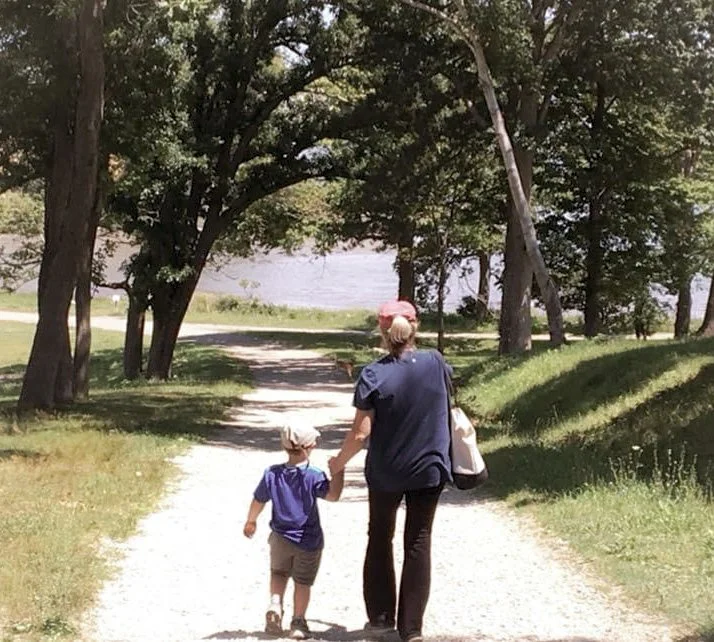
At a certain point, it stops being something you think about. It becomes how you move. You don’t force it. You adjust. A shift in attention, a different question, a quieter decision. Nothing dramatic. But it changes what follows.